

The long-term safety profile of externally administered MOTS-C has not been established. The effects were reported in young (middle-aged), and older animals. No study results had been posted at the time of this article. The original study reported that MOTS-C influenced metabolic homeostasis and reduced certain features of obesity and insulin resistance in mice.
Our team can assist you in determining the most appropriate type of visit if this article prompted a health-related question. Although lab results appear encouraging, current data do not endorse the use of MOTS-c in place of traditional primary care treatments. This treatment is not officially acknowledged as a wellness remedy and lacks established dosing recommendations.
See SS-31 protocol.Metformin (drug, not peptide)AMPK activator, among other effects.FDA-approved for type 2 diabetes; widely studied for healthy aging.FDA-approved prescription drug. https://themotscpeptide.com/ FDA-approved for type 2 diabetes; widely studied for healthy aging. Lee and colleagues (2015, Cell Metabolism) showed MOTS-c reduced obesity and insulin resistance in mice on a high-fat diet. Fatigue is sometimes addressed by lower doses or morning timing in reported use.
Sourcing and Quality Considerations
While your body produces it, levels significantly decrease with age, which is linked to metabolic dysfunction, insulin resistance, and decreased exercise capability frequently observed in older adults. Typically (clinical protocols recommend administering 5-10mg weekly through subcutaneous injection), either as a single weekly dose of 5mg or divided into smaller doses, such as 2.5mg twice a week. As individuals age (circulating levels of MOTS-C diminish), which is associated with the metabolic dysfunction, insulin resistance, and decreased exercise capacity often seen in older adults.
Research-grade suppliers vary widely in terms of testing standards (purity verification), and manufacturing practices. For those exploring MOTS-c within a research context — sourcing quality deserves serious attention. Stacking multiple peptides without a clear understanding of how they might interact increases risk rather than simply “doubling up” on potential benefits.
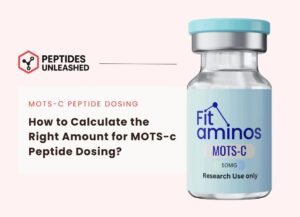
Optimal practices, frequency, and timing.
This article discusses the actual biology, the findings from animal studies and early human observations, and explains that the disparity between this evidence and a commercial product is not a mere marketing error, but rather an unresolved scientific issue. In animal studies, safety data for acute and short-term administration has shown to be benign across various doses examined. Metformin’s clinical role is established and well studied; MOTS-c’s is not. Studies have identified links between MOTS-C levels and specific metabolic disorders, yet the findings have been inconsistent, and traditional clinical assessments are more widely recognized.
MOTS-c is much more effort than oral mitochondrial supplements such as urolithin A and more complex than exercise or nutrition tracking once those routines are established. The injection itself is quick, but the setup burden is real for users not already comfortable with peptides. The side-effect score stays Low because observed real-world nuisance effects look low, while FDA’s peptide impurity and immunogenicity concerns keep the certainty low. The common pattern is injection-site redness (transient swelling), and occasional early-cycle fatigue. The main issue may be safety, supervision, legality, product quality, opportunity cost, or simply weak evidence outside the best-matched population. Users commonly cycle 4-8 weeks on and 4 weeks off, but that pattern is precautionary rather than evidence-based.
The research is interesting, but the strongest treatment findings still come from cells and animals. MOTS-c is a mitochondrial-derived peptide studied for its role in energy metabolism, insulin sensitivity and the response to exercise. They are studied for related goals but are not interchangeable. MOTS-c is studied in metabolic health (exercise capacity), body composition, aging, bone metabolism, and inflammation. Tesamorelin works through growth hormone, not AMPK.
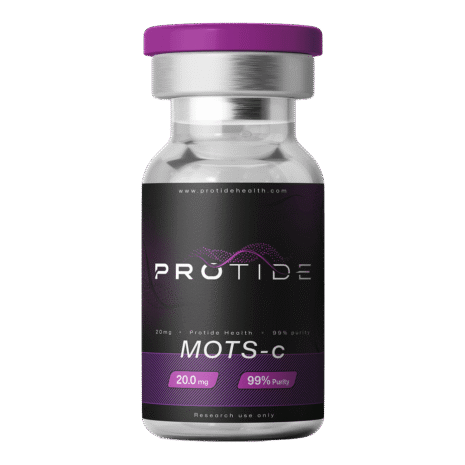
Reliable side-effect rates are not established because there is no FDA-approved MOTS-c product with a large human safety database. Injectable MOTS-c is being studied for metabolic and exercise-related biology, but it is not proven to improve weight, insulin sensitivity, energy, performance, or longevity in humans. If you want a deeper review of why we do not publish a patient protocol for this peptide, read our MOTS-c dosage protocol article. If your real goal is weight or metabolic health, it is better to start with a clinical evaluation than with an experimental injectable peptide. For more detail on access questions, see our article on whether you can buy MOTS-c peptide online. Some articles also mention CB4211, a MOTS-c analog.
The peptide exists naturally within the body and has generally been well tolerated in animal trials at the examined doses, without significant toxicity reported in the short-term preclinical studies released thus far. The straightforward truth about safety is that the human safety profile of MOTS-c remains inadequately defined. We intentionally refrain from providing dosing recommendations for MOTS-c — as doing so might suggest a safety and efficacy profile that has not been verified in controlled human studies.
Subsequent studies confirmed these findings across multiple animal models, including genetic obesity models , ob/ob mice,. This decline correlates with reduced metabolic flexibility (increased insulin resistance), and greater susceptibility to age-related metabolic diseases. Its discovery by Dr. Changhan David Lee and colleagues at USC established that mitochondria don’t just generate energy; they produce signaling molecules that regulate whole-body metabolism. MOTS-C (Mitochondrial Open Reading Frame of the Twelve S rRNA Type-C) is a 16-amino acid peptide encoded by the mitochondrial genome.